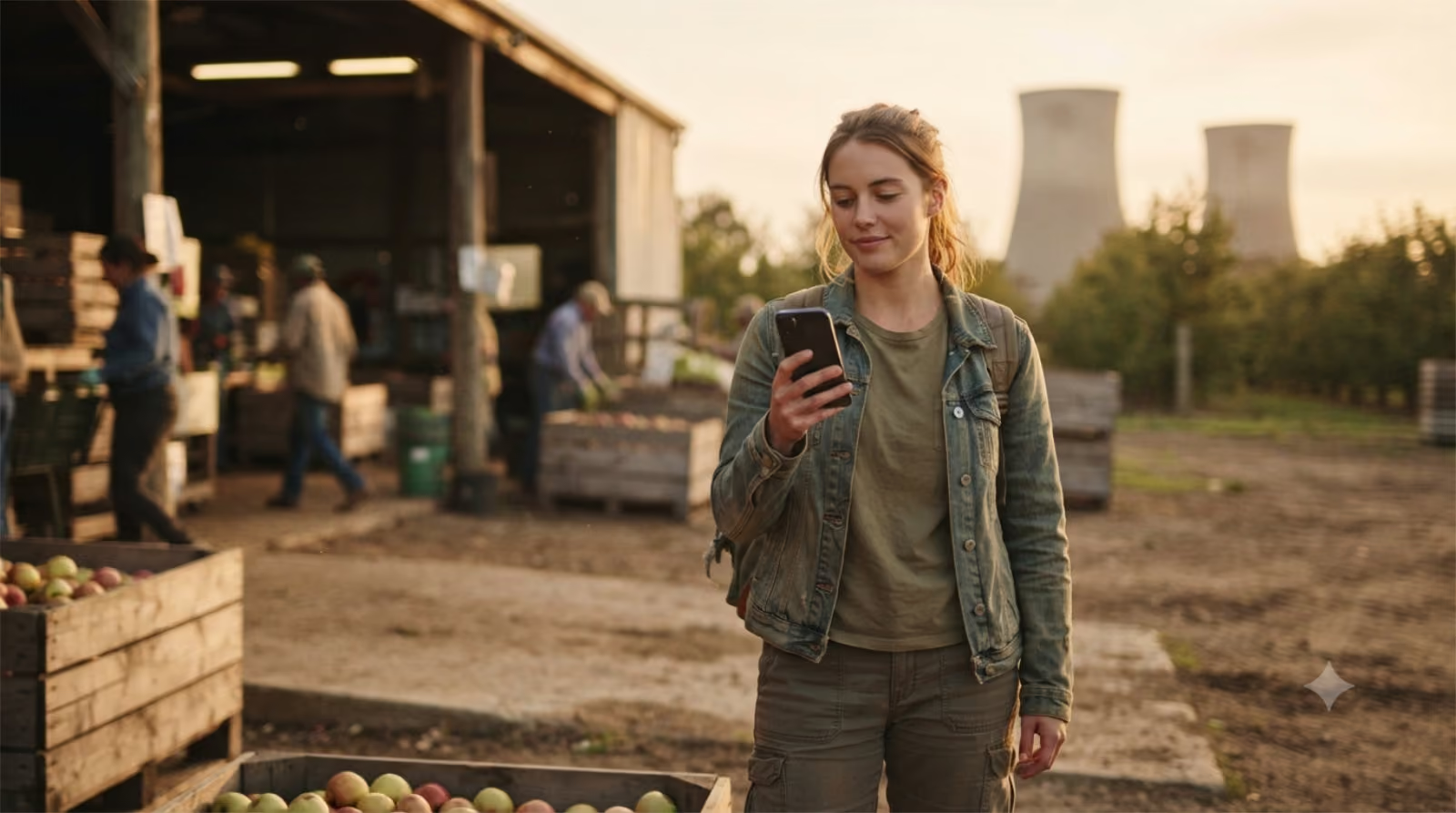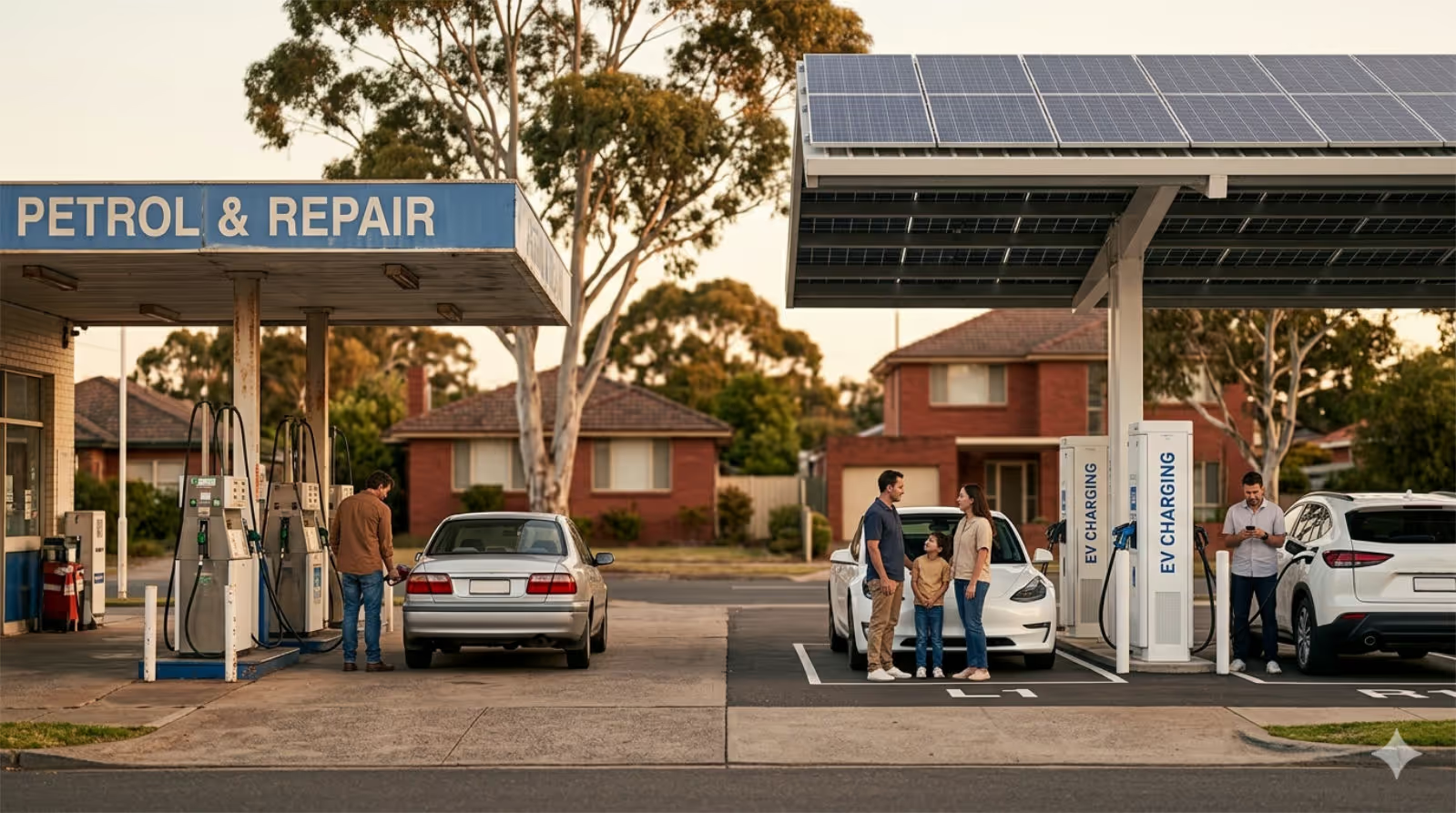
It wasn't one crisis. It was a system under pressure from every direction at once. And this time, the alternatives were ready.
The world ran on fossil fuels. Then it didn't.
The Middle East is at war. Refineries burning, shipping lanes blocked, oil prices doing something nobody thought was possible: climbing past records and staying there.
But this time it isn't just petrol. Natural gas prices are surging too. Australia exports enormous volumes of liquefied natural gas to Japan, South Korea, and China. When global demand spikes, domestic supply gets squeezed and Australian households and businesses pay more for their gas bills, even as the ships leave the port full. The two crises arrive together. Petrol at the bowser and gas on the quarterly bill. It isn't one shock. It's a system under pressure from every direction at once.
And then there's the third driver that nobody in the energy debate was expecting. The AI revolution needs power. Enormous amounts of it. Every major technology company on earth is building data centres, and data centres are hungry in a way that dwarfs almost anything else on the grid. The question of where to put them, and how to power them affordably and reliably, has become one of the most important questions in global infrastructure. Australia's answer is sitting there in the middle of the continent: a desert the size of Western Europe, with more sunlight per square metre than almost anywhere on the planet, and a stable democracy that global capital trusts.
The commercial logic is impossible to ignore. Power AI with Australian sun. Export clean electricity the way we once exported coal. The investment flows that follow reshape the entire energy economy.
Petrol was always too embedded, too convenient, too cheap to replace. Natural gas had decades of infrastructure behind it. And too many powerful people had too much to lose from changing either. The oil companies, the gas exporters, the governments that taxed every litre of petrol and every unit of gas, the superannuation funds invested in fossil fuel companies. The incentives to keep things as they were ran deep and wide.
Here's the thing though. This time the alternatives were ready. And the pressures were coming from too many directions to resist.
Signals happening now
These aren't predictions. You can already see them.
- Solar technology has escaped the panel. CSIRO is already researching perovskite solar cells that can be printed onto flexible film and integrated into windows and building surfaces. The first commercial flexible perovskite production lines were delivered in late 2025.
- Australia's renewable energy share reached 43.7% of grid generation in 2025, with the final quarter recording 51% for the first time. No new coal power stations are being built anywhere in the country.
- The next generation of home batteries is already here. In the second half of 2025 alone, Australians installed more than 183,000 home battery units, more than the previous five years combined. Australia is now the third-largest utility-scale battery market in the world.
- Electric cars topped 17 million in global sales in 2024, accounting for more than one in five new cars sold worldwide. In Norway, 88% of new cars sold were battery electric. The shift is not slowing down.
- The AI economy is driving a wave of energy investment in Australia unlike anything seen before. Amazon has committed AU$20 billion to Australian data centres between 2025 and 2029, and Microsoft has pledged a further AU$25 billion by the end of 2029. Data centres need reliable, cheap electricity at massive scale. Australia's solar resources and stable democracy make it the natural home for Asia-Pacific AI infrastructure, and the investment is already reshaping where clean energy gets built.
The moment everything changed
It's 2040 and the energy transition that decades of climate promises couldn't deliver has been completed by a power bill. Two power bills, actually. Petrol at the bowser and gas on the quarterly statement.
When fuel costs stopped being a complaint and started being a crisis, something snapped. Not gradually. Overnight. People who'd been meaning to get solar panels and home batteries for years made the call that week. Families traded in petrol cars earlier than planned. Tradies started running their utes on electricity. Renters pushed landlords. Landlords responded because the numbers finally made sense.
The data centre boom accelerated everything. When global technology companies started building massive solar and wind farms in the Australian outback to power their AI infrastructure, they brought the scale, the skilled workers, and the grid investment the clean energy transition had been waiting for. The commercial scale that climate policy couldn't force arrived through a different door.
Governments that had been slow to move suddenly found themselves scrambling to catch up, competing for manufacturing deals they should have locked in years earlier.
The technology was ready. That's the thing nobody fully appreciated at the time. The cost of solar and batteries had been falling for fifteen years straight. Clean energy was already cheaper than coal power across most of Australia. It just needed a shove. Several shoves, arriving at once, turned out to be enough.
Australia's last petrol-only car rolls off a production line in 2033. Nobody marks the occasion. It's only obvious in retrospect.
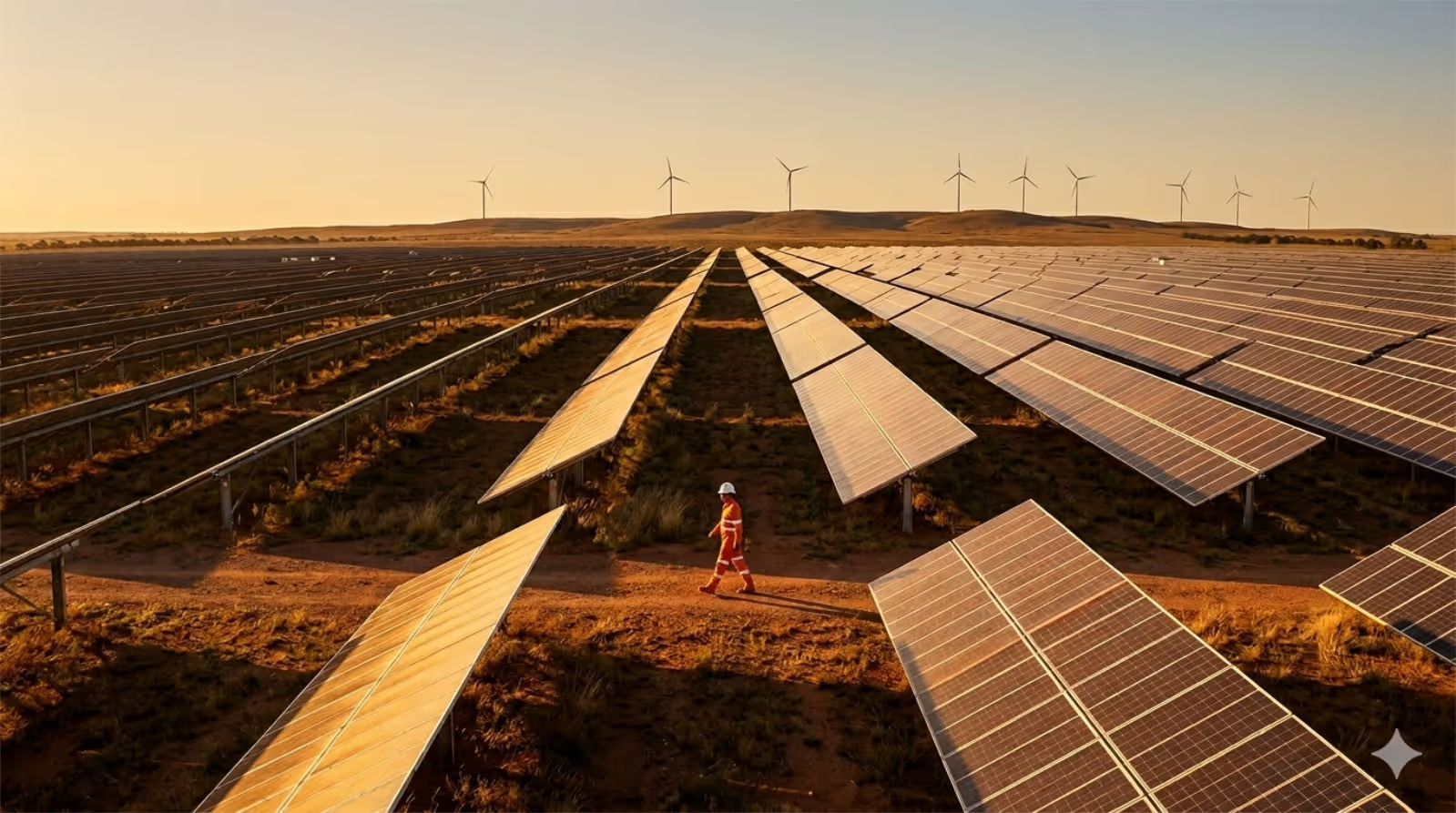
A house built in 2035 generates electricity from its roof, its walls, and its windows simultaneously. A car rolling off the line in 2037 harvests energy from every surface facing the sun. No charger needed for typical daily use. Just park it outside.
Solar gets into everything
By 2030, most of Australia's electricity is coming from renewables on most days. But the grid story is the boring part.
The interesting part is what happened when solar technology stopped being a thing you bolt to a roof.
The new generation of solar can be printed, coated, or applied to almost any surface. It's now built into roofing tiles, window glass, and the body panels of vehicles. A house built in 2035 generates electricity from its roof, its walls, and its windows simultaneously. A car rolling off the line in 2037 harvests energy from every surface facing the sun. No charger needed for typical daily use. Just park it outside.
The discrete solar panel bolted to a roof is starting to look like a first-generation idea, functional but clunky, like a roof antenna. The next version is invisible. It's just the surface of things.
Your home becomes a power station
Battery technology kept up with solar. The new generation of home batteries, smaller, safer, and longer-lasting than what came before, made it possible to use the electricity you generate during the day through the night. In suburbs built after 2032, a home that generates all its own electricity isn't a green lifestyle choice. It's just what a new house is.
Many of these homes generate more electricity than they use and sell the leftovers back to the grid. Your neighbour's roof is quietly powering your evening.
The EV shift happened faster than the sceptics expected and slower than the optimists promised. The fuel crisis triggered a surge in electric car sales that briefly overwhelmed the charging network, which triggered a rush of investment, which resolved the problem inside four years. By 2035, buying a petrol-only car is like asking for a manual transmission. By 2040, you can't.
Australians are spending around 40% less on electricity than they did in 2026, even though they're using more of it. The cost of generating and storing your own energy fell faster than anyone modelled. People who used to dread their power bills now barely think about them. What they think about instead is how much their solar panels generated today, whether their battery is full, and how much they sold back overnight. Energy went from invisible to personal. And personal turns out to be powerful.
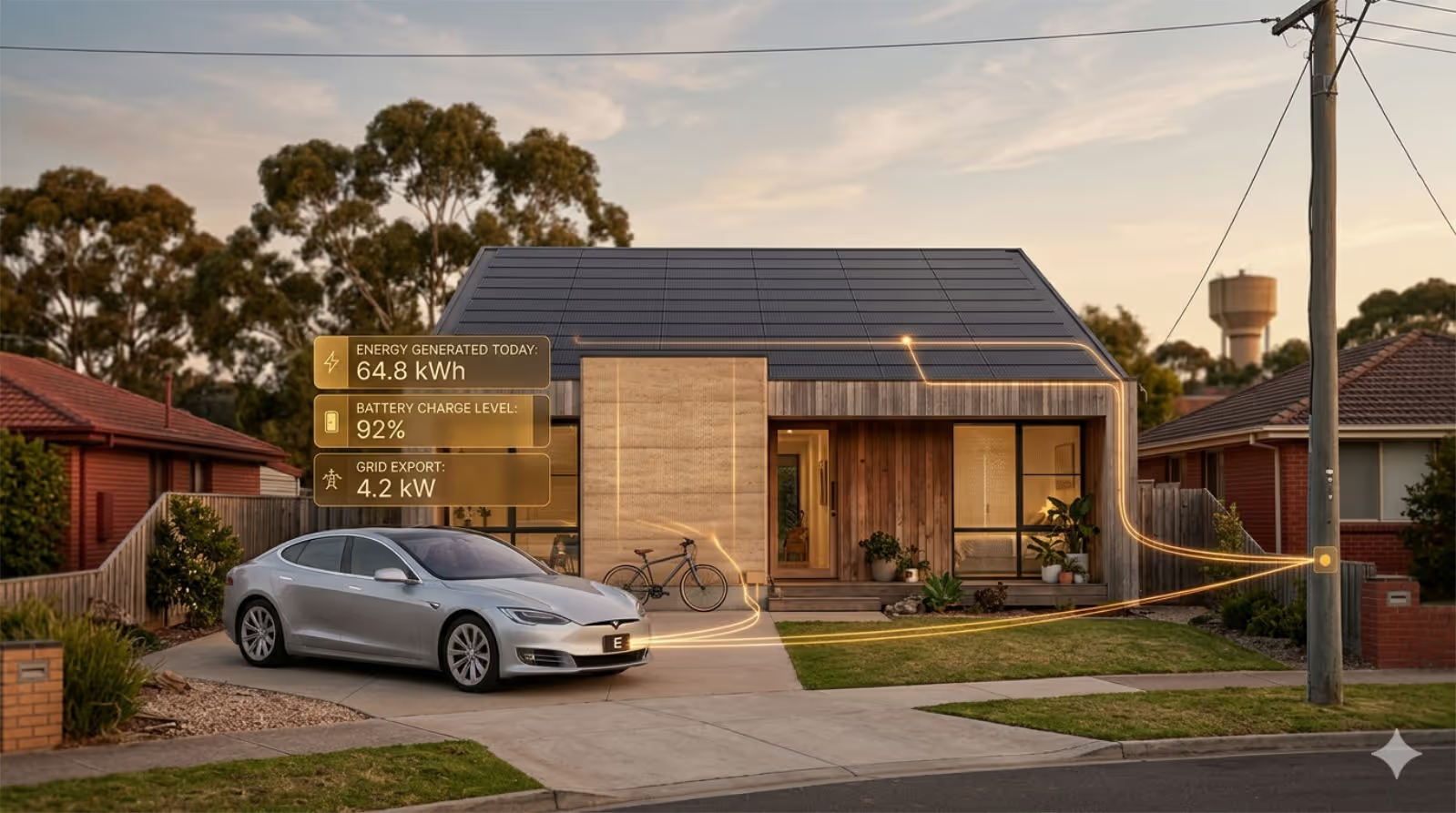
The energy companies that made it through are unrecognisable. They figured out what they actually were: infrastructure companies. The fuel was always the incidental part.
An entire industry had to reinvent itself or disappear
The energy companies that survived the transition are unrecognisable. The ones that saw it coming and moved fast are now running the networks, storage systems, and software that manage millions of homes generating their own electricity. They figured out what they actually were: infrastructure companies. The fuel was always the incidental part.
The ones that didn't read the room don't exist anymore. Not because they were bought out, though some were, but because the thing they sold stopped being something people needed. The parallel to Kodak is obvious in retrospect. At the time, it wasn't.
The bigger shift though is what happened to ordinary people's relationship with energy. For most of living memory, electricity and fuel were invisible. They arrived, they cost money, you didn't think about them unless something went wrong. When people started generating their own electricity, storing it, selling it, energy became interesting. Personal. Something to pay attention to. People got into it the same way they got into sourdough during lockdowns, except this one compounded in value every year.
The household tracking its own energy in 2040 isn't unusual. It's the majority. That's a different kind of consumer than the one your business was designed around.
What would have to be true
This scenario is plausible but it isn't inevitable. Three things would need to go right.
The fuel and gas crisis has to last long enough that people stop expecting prices to fall. Previous energy shocks ended and everyone went back to their habits. This scenario requires a long enough stretch of pain across both petrol and gas that people make permanent changes rather than waiting it out.
The new generation of solar has to hold up outside the lab. The efficiency numbers are impressive and real. Getting them to last twenty-five years on a rooftop at commercial scale is a harder problem that's still being worked out. The evidence suggests it's solvable. The timing is the question.
The AI investment wave has to land in Australia rather than somewhere else. The commercial logic is strong. The solar resources are real. But data centre investment follows regulatory certainty, grid reliability, and skilled workers. Australia has to make the case clearly and consistently enough to win those deals over competitors with their own advantages.
Signal sources
- CSIRO, 'Next-generation perovskite solar cells'
- Expert Market Research, 'Australia renewable energy market size and forecast'
- Clean Energy Council, 'Record home battery surge charges up Australia's biggest power station on Aussie rooftops'
- IEA, 'Trends in electric car markets, Global EV Outlook 2025'
- Battery Tech Online, 'SK On speeds up solid-state battery timeline'
- Amazon, 'Amazon will invest AU$20 billion in Australian data centres'
- Microsoft, 'Microsoft deepens commitment to Australia with A$25 billion investment in AI infrastructure'
What this means for your business
Professional services
If this future arrives, your clients will start asking questions that most advisers aren't ready for yet. What happens to our property values and our investments if fossil fuels become a liability? Which of our operating costs are about to reprice permanently? How do we think about energy as a competitive advantage rather than a fixed cost? The firms that have worked through these questions before the client asks will be in a very different conversation. The energy transition conversation your clients haven't had yet is the one worth starting now.
Healthcare
Healthcare runs around the clock and uses enormous amounts of energy. Most organisations have treated this as a facilities issue rather than a strategy one. If this scenario plays out, the gap between organisations that locked in renewable energy or invested in on-site generation and those that didn't will be significant and widening. There's something more interesting to sit with too. The patient of 2040 grew up managing their own energy data, health data, and finances on a phone. They'll expect the same transparency and control from their healthcare provider. Is your organisation building for that person?
Retail
Think about everything in your business that runs on energy: refrigeration, lighting, air conditioning, delivery, supply chain. All of it is being repriced right now, and not at the same pace. The retailers who acted early on energy will have a cost structure that's getting harder for competitors to match. The more interesting conversation is about the customer. A household that actively manages its own energy generation thinks differently about consumption, sustainability claims, and who they buy from. Your brand's position on energy isn't a values question anymore. It's a commercial one.
Consumer products
A huge proportion of what goes into manufactured goods comes from oil: plastics, fibres, adhesives, packaging. When oil gets expensive and unreliable, that's not just a cost problem, it's a supply chain problem. The companies already developing alternatives, plant-based materials, different packaging formats, weren't just being environmentally minded. They were hedging a risk that is now sitting on everyone's desk. How deeply are petroleum-derived materials embedded in your supply chain, and what would it take to reduce that dependency before the pressure arrives?
Education
Energy is one of the biggest operating costs on most campuses, and most institutions have treated it as background noise for years. If this scenario arrives, the gap between institutions that acted and those that didn't will be a real competitive disadvantage. But the more urgent question is curriculum. The energy transition and the AI data centre boom are creating demand for skills most institutions aren't producing: grid design, battery systems, energy finance, sustainable materials. The institutions that build genuine capability here won't just be doing the right thing. They'll be attracting the students, the research funding, and the industry partnerships that follow real relevance.
The question worth sitting with
Every previous energy shock ended the same way: prices fell, habits snapped back, and nothing fundamentally changed. This one was different because the pressures came from too many directions at once, and the alternatives arrived at exactly the right moment.
Cheap, predictable energy shaped how your business was built, where you located, how you moved things, what your customers expected, what your costs looked like. That era is ending. Which parts of what you've built still make sense in the one that's replacing it?