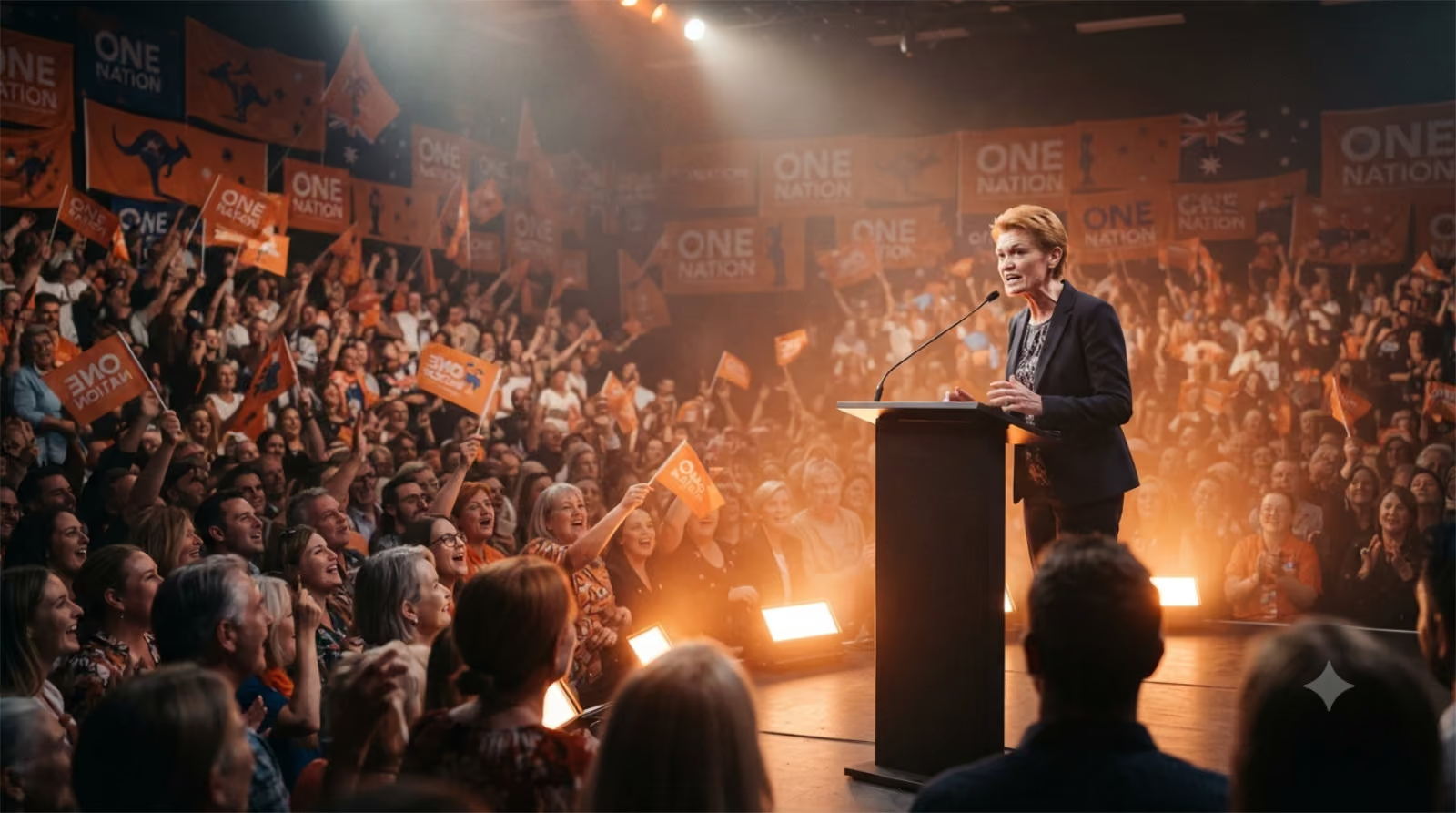
For two centuries, society ran a simple deal. Use your mind. Build expertise. The world will reward you for it. That deal is breaking.
The deal nobody named
There's a deal most educated people made without realising they'd made it. Study hard. Develop expertise. Build a career on what you know and how you reason. The people who worked with their hands were always vulnerable to machines. But the lawyers, the accountants, the analysts, the consultants thought they were safe. Intelligence was their asset. And intelligence was scarce.
That scarcity was the foundation of everything. The fees they charged. The salaries they commanded. The status that came with the job title. An experienced barrister charges several thousand dollars an hour. Not because the hours are pleasant. Because the judgement is rare, and rare things are expensive.
AI doesn't make genuine judgement cheap. But it makes most of what passes for judgement in most professional contexts available to anyone with a decent phone. And "most" is enough to break the deal.
The institutions that sold the deal know this. They're not saying it. Universities, law societies, and professional bodies have every incentive to keep telling the next cohort that expertise equals security. Some of them believe it. Most of them have a business model that depends on it.
Signals happening now
These aren't predictions. You can already see them.
- January 2025 recorded the lowest number of professional services job openings since 2013, with vacancies down around 20% on the year before.
- LawConnect, an Australian AI legal platform, handled over 120,000 inquiries in 2025. Just 22,000 of those asked for a quote from a human lawyer.
- 78% of Australian accounting firms are already using some form of AI. Tools like Xero and MYOB are automating data entry, transaction categorisation, and anomaly detection in real time.
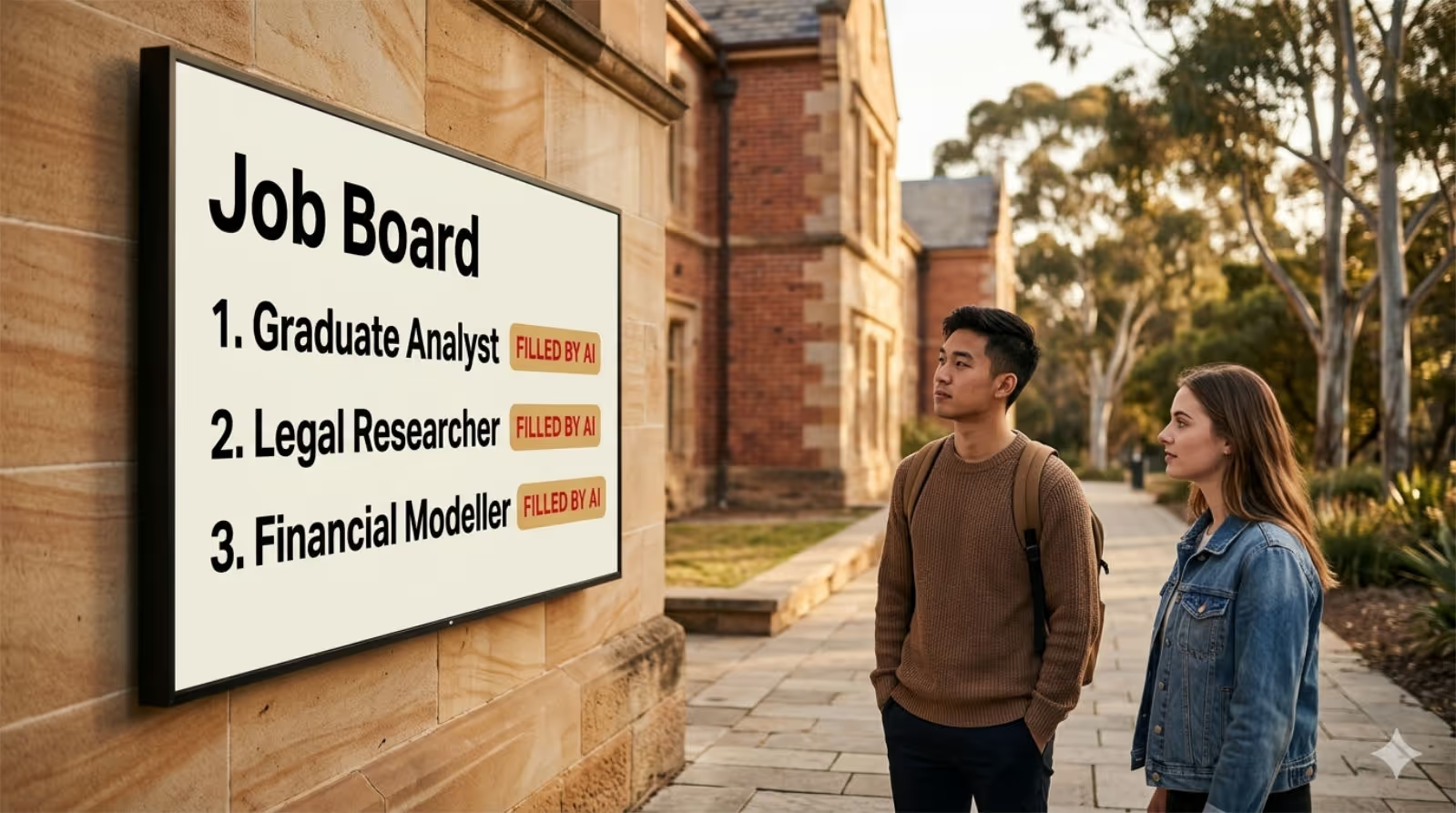
- Big tech firms cut graduate recruitment by 25% in 2024 compared with the year before, down more than 50% from pre-pandemic levels. The entry-level roles that used to exist aren't being filled. They're being replaced.
- Australia will need 400,000 additional aged care workers by 2050. The fastest-growing jobs in the country require a body and a beating heart.
The promise that's breaking
It's 2040 and the most talked-about economic crisis of the decade isn't in property or financial markets. It's in human capital.
Think about what a degree actually is. It's a promise. You pay for it with years of your life, real money, and a debt that follows you out the door. In return, everyone tells you the same thing. Your parents. Your school. The government. The university taking your money. Expertise equals security. The investment will pay off. This is how you build a future.
That promise is breaking.
The expertise the degree was supposed to certify is now being replicated, faster and cheaper, by systems that don't sleep, don't ask for a pay rise, and don't need superannuation. The asset is devaluing. The HECS debt isn't.
The universities taking tens of thousands of dollars from students right now, preparing them for careers that AI is eliminating, are doing something that in any other industry we'd call mis-selling. We don't call it that because we've agreed to treat education as inherently noble. That agreement is worth questioning.

The expertise the degree was supposed to certify is now being replicated, faster and cheaper, by systems that don't sleep, don't ask for a pay rise, and don't need superannuation. The asset is devaluing. The HECS debt isn't.
The jobs we told everyone to avoid
Here's the part nobody saw coming. The jobs that survived aren't the ones we spent decades pointing people toward.
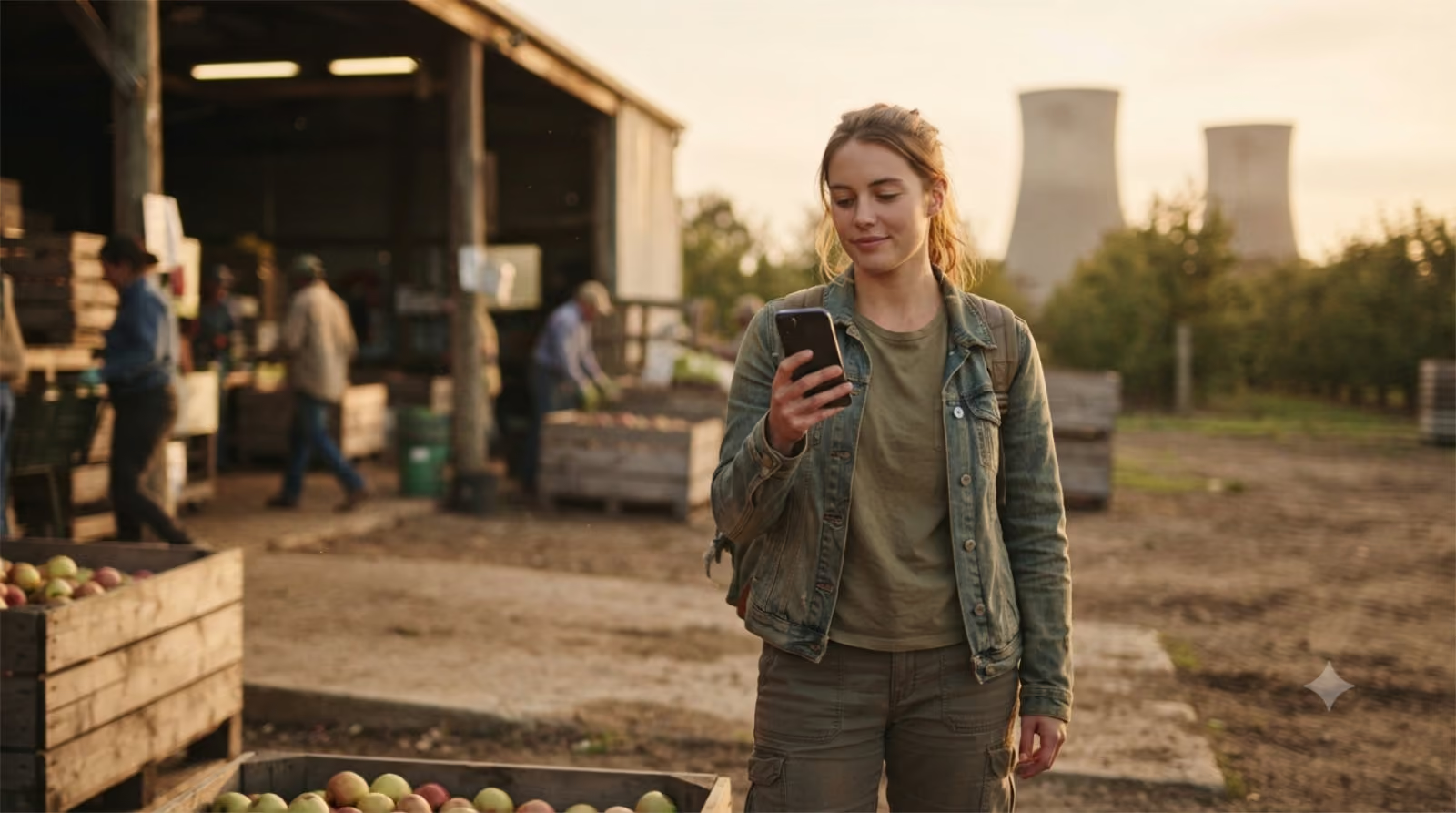
The electrician. The physio. The carpenter. The nurse. The plumber. The counsellor. The builder. The aged care worker. The people who show up in person, put their hands on things, and fix what's broken, including other people. These are the workers who turned out to be AI-proof. Not because the work is simple. Because being there in person, using your hands, caring for someone in the room, these are things AI still can't do.
Australia never really had the class snobbery around trades that other countries did. Plenty of tradies out-earn lawyers and always have. But the career advice system told a different story. Stay in school. Get a degree. The knowledge economy is where the future is. University pathways got the funding, the prestige, and the marketing. Vocational training got the leftovers.
That advice wasn't malicious. It just aged badly. The knowledge economy is exactly where AI is doing the most damage. The tradie who was supposedly taking the safe-but-unglamorous path turns out to have been better positioned than the law graduate. Not because anyone planned it that way. Because physical presence, hands-on judgement, and care for another person in the room are things AI still can't replicate.
The people who built things, fixed things, and cared for people weren't on the wrong track. The career advice system was.
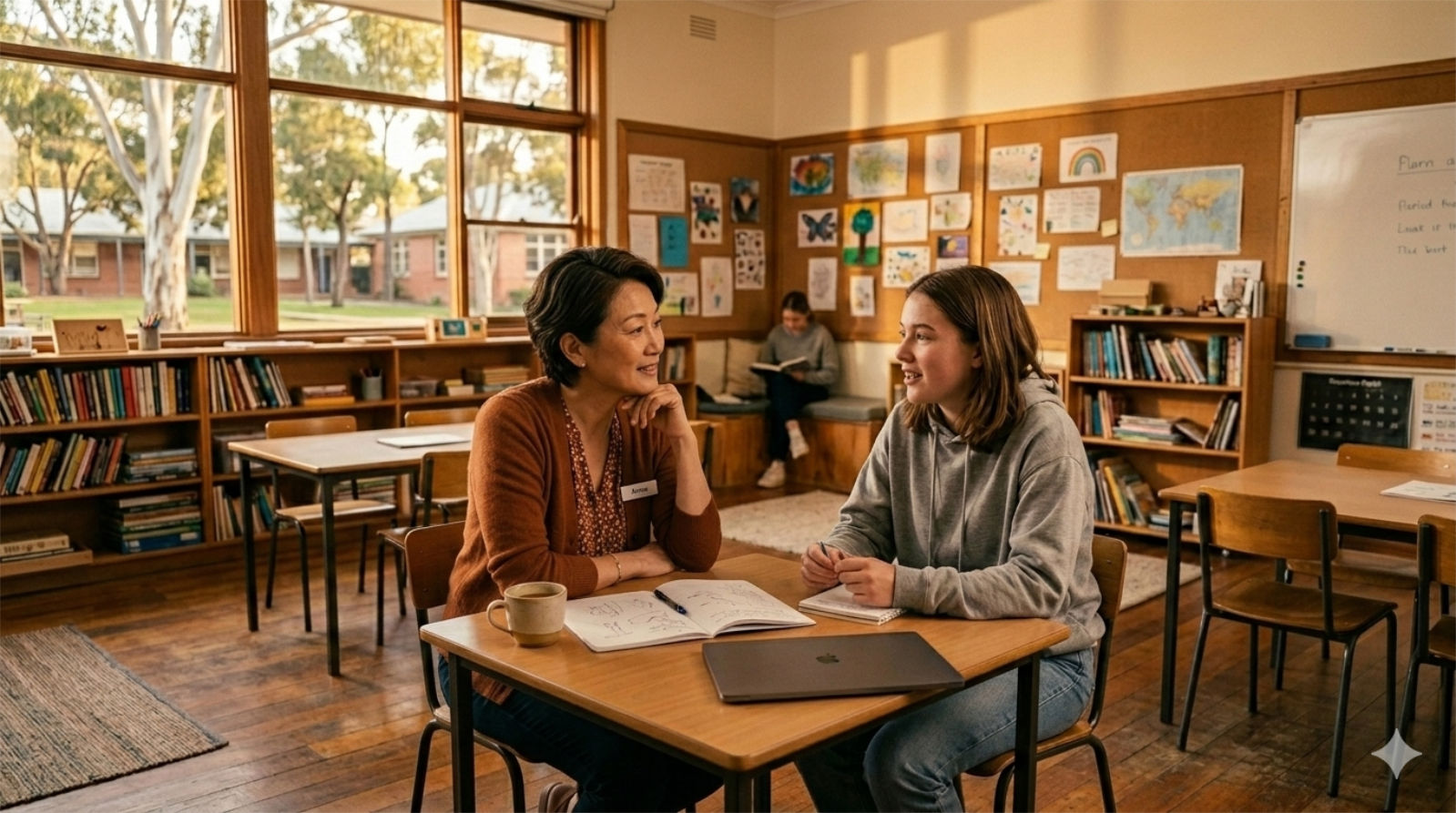
The people who built things, fixed things, and cared for people weren't on the wrong track. The career advice system was.
Empathy is the last competitive advantage
There's one more category of work that AI can't touch. Not the physical. Not the technical. The human.
Managing people through change. Sitting with someone whose career has just disappeared. Leading a team that's frightened. Counselling a client through a decision that feels impossible. Being present with another person in a way that makes them feel less alone. These aren't soft skills. They're the hardest skills there are. They just weren't valued, because for most of modern history they weren't scarce.
They're scarce now.
The most valuable professional in 2040 isn't the smartest person in the room. It's the person who can read the room, feel what others are feeling, and help people navigate what they didn't choose. The more AI displaces, the more people need someone to sit with them through it. That someone is worth more every year.
For a long time, keeping your feelings out of it was considered a strength. Stay detached. Show no weakness. That turned out to be terrible preparation for what's coming. The people who learned to feel, to listen, to be genuinely present with others are better positioned than those who didn't. The market is pricing empathy correctly for the first time.
Women have been doing this work for centuries, mostly unpaid or underpaid. The care, the presence, the simple act of showing up for someone. The economy is now desperate for exactly that. It was never less valuable. It was just less valued. The difference matters enormously, and correcting it is long overdue.
What would have to be true
This scenario is plausible but it isn't inevitable. Three things would need to go right.
AI has to keep improving at cognitive work faster than people adapt. If professionals successfully reinvent what they offer before the displacement becomes severe, the credential crisis doesn't happen at the scale this scenario describes. The technology is moving faster than most professions are adapting. But adaptation is possible, and some will manage it.
The credential system has to keep selling the same product. If universities and professional bodies genuinely reinvent what they're training people for, the mis-selling accusation loses its force. Some institutions are starting to ask the right questions. Most are still running the same programs they were ten years ago.
Society has to keep undervaluing physical and care work. If Australia seriously invests in trades, care work, and the helping professions, not just in words but in pay, training, and status, the shift can happen without a crisis. That investment isn't happening yet, not anywhere near the scale required.
Signal sources
- The Indian Sun, 'AI is squeezing graduate jobs while Australia bets on a skills reset'
- Lawyers Weekly, 'Legal work could be fully automated within 18 months, Microsoft AI chief predicts'
- The Access Group, 'Why every Australian accounting firm needs an AI policy in 2025'
- TechCrunch, 'AI may already be shrinking entry-level jobs in tech, new research suggests'
- Health Staff Australia, 'The growing demand for care workers in Australia'
What this means for your business
Professional services
If this future arrives, the firms that thrive will be the ones that worked out early what they were actually selling. Not research. Not drafting. Not analysis. Those are already getting cheaper. What clients will pay a real premium for is judgement under genuine uncertainty and the ability to be trusted when the stakes are high. The conversation worth having inside your firm right now: if AI handled everything it's already capable of handling, what would be left? Is that enough to build around? Is it what you're hiring for?
Healthcare
Healthcare is where this scenario plays out most visibly. AI is already handling diagnostics, anomaly detection, and documentation at a level that's reshaping clinical roles. If this trend continues, the most valuable clinical contribution will be the things that require presence, not pattern recognition. The question for healthcare leaders is whether their organisations are investing in both sides of that equation: the AI tools that improve efficiency, and the human capability that can't be automated. What would your patient experience look like in 2040 if you got that balance right?
Retail
The knowledge work behind retail, the buying, the planning, the forecasting, the marketing strategy, is being automated from below. If this future comes true, the leaders who succeed will be the ones who understood their customers in ways the data never fully captured, and who could lead anxious teams through significant change. The discussion worth having now: which roles in your organisation are you hiring because they can analyse, and which ones are you hiring because they can decide, connect, and inspire? The first category is increasingly at risk. The second isn't.
Consumer products
AI can produce content, generate options, and optimise campaigns. What it can't do is understand why people love a brand, or lead a team that's worried about its future. If this scenario plays out, the companies that come out ahead will be the ones that invested in genuine creative judgement and people leadership alongside their AI tools, rather than treating AI as a cost-cutting exercise. The question to sit with: if your creative and marketing function were half the size it is today, what would you lose that the AI couldn't replace?
Education
This is the sharpest edge of the scenario. If it comes true, the institutions preparing students for knowledge-based careers are selling something that is declining in value faster than the fees are declining. The hard conversation every institution needs to have is about what a qualification represents in 2040. Not just what courses are offered, but what outcomes students can actually expect, what skills will still be scarce when they graduate, and whether the institution is being honest with them about both. The ones that have that conversation early will be the ones worth attending.
The question worth sitting with
We built careers, industries, and an entire way of measuring people on the idea that intelligence was the most valuable thing a person could offer. Then we automated it.
The things we undervalued for centuries, physical skill, emotional presence, the ability to sit with another person through difficulty, turned out to be the things that can't be replicated. We didn't have it wrong by accident. We had it wrong because the people setting the rules benefited from them.
What does your business look like if you rebuild it around what's genuinely scarce now?